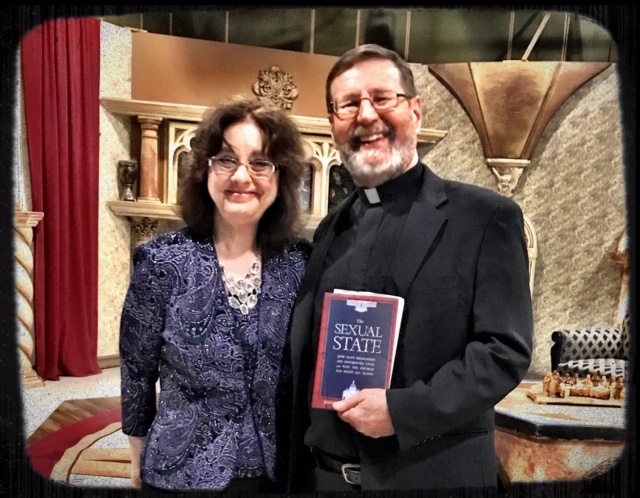
This is the link to my interview with Fr. Mitch Pacwa on EWTN LIve on May 1, 2019. Fr. Mitch had actually read the book, and did a very good interview with me!
This is the link to my interview with Fr. Mitch Pacwa on EWTN LIve on May 1, 2019. Fr. Mitch had actually read the book, and did a very good interview with me!
Originally published at the National Catholic Register, February 25, 2019
Recently, I noticed my friend Leila Miller repeating online that she does not insist that people remain living with an abusive spouse. My inclination was to say, “Stop! You don’t need to say it 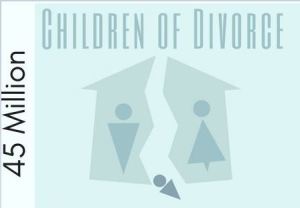 again!”
Around the same time, I noticed that I was about to repeat myself on a seemingly unrelated topic. I started thinking, “What exactly is going on here?” My answer: We are dealing with weaponized self-pity, not a good-faith question.
Miller is the author of Primal Loss: The Now-Adult Children of Divorce Speak. She gives voice to the adult children whose lives were disrupted by their parents’ divorces. This is the context in which people continually challenge her about abusive marriages. “Why,” Miller asks herself in frustration, “do I have to keep assuring people that no one is required to remain living in abusive situations?”
I’ve had this experience myself. Like Miller, I point out how difficult divorce can be for children. Our focus is on the children, their lifelong suffering and what we can do about it, as individuals and as a society.
Originally published at The Stream on January 8, 2019, reprinted here with the exact tagline that appeared with the article.
Tucker Carlson is right. But his method is wrong. 
Tucker Carlson’s monologue on January 2 set off a firestorm of negative commentary. I want to say for the record: I agree completely with Carlson’s closing statement, “If you want to put America first, you’ve got to put its families first.” I also want to say for the record: I disagree with the wrappings in which Carlson presented his important message.
Here is why he is profoundly correct: Continue reading “Why I Stopped Talking About Economics When I Started Talking About Family”
I see where Cardinal Cupich is planning a series of seminars on Amoris Laetitia. According to a letter obtained by the Catholic News Agency, the “New Momentum Conferences on Amoris Laetitia,” will “provide formative pastoral programs.” As someone who has listened to many victims of the Sexual Revolution, I am eager to learn about the “pastoral practice” these seminars will promote. I wonder if they will feature adult children of divorce or unmarried parents among their presenters.
 I can still recall the first time a young person came up to me in tears after one of my talks. “This is the first time I have ever heard an adult say that divorce is hard on children.” She went on to describe her father’s intention of entering yet another civil marriage, this time, to a woman in her twenties.
My young friend was twenty-one.
Since that incident, I have heard from many people of all ages, whose parents divorced and remarried. I can remember sitting down to a post-conference dinner with one of the other speakers and his wife. She confided in me that she had run out of the room in the middle of my talk. She couldn’t bear to hear my description of children’s hurt from divorce. My talk stirred up pain from her parents’ divorce.
She was in her sixties.
I don’t see any mention of Leila Miller or Jennifer Johnson among the proposed speakers on the traveling Amoris Laetitia Road Show. Both Mrs. Miller and Ms. Johnson have written poignant works on the experiences of children of divorce. You may imagine what the adult children of divorce have to say about second “marriages.”
Or perhaps you can’t. So, let me tell you: they feel their parents’ selfishness and excuse-making made their childhoods miserable, and continue to cause problems even in adulthood. One anonymous author titled her essay, “How my parents’ divorce ruined holidays and family life forever.”
Perhaps some of the presenters at the Amoris Laetitia gabfests will offer practical tips for what a child, of any age, ought to do when their parents decide they can’t stand each other anymore. Will Cardinal Cupich “accompany” the children of divorce when they see no photos of themselves with both parents, in either of their parents’ homes? Will any of the presenters help the children of divorce “discern” where to direct their anger when their stepfather brings home gifts for his children and his wife, but nothing for them?
I wonder if Cardinal Cupich and his friends will discuss the inequalities that divorce creates among children, and between children and adults. Jennifer Johnson argues passionately that natural marriage and only natural marriage, can create and preserve equality among children, while divorce creates deep and lasting inequalities. Here is just one example:
I was the only one who had divided Christmases, divided holidays, and divided birthdays. I’ve seen this referred to as “two Christmases” or “two birthdays” in some divorce literature as a way to sugar-coat the vertical inequality. My dad wasn’t welcome on Christmas morning, and my mom wasn’t welcome on Christmas eve. I don’t think either of them would have come, had they been invited. They were too busy with their new families. When I got a little older and my parents lived further apart, I traveled alone during the holidays to see each of them. None of the adults in my life had to do any of those things. It was a requirement placed on me that made their lives easier.
No, I suppose they don’t have room for children of divorce and their lived experiences. After all, the seminars are already full of experts on women’s ordination, contraception, non-binary gender, and God knows what else.
Speaking of God: I have an idea that Jesus (remember him?) knows exactly what these children of divorce are going through. He told the apostles “in the beginning, it was not so,” when he instituted that whole one man, one woman, for life, thing. The apostles were freaked out. They thought it was too hard.
I bet Jesus saw the pain a little girl might feel when her mother asked her to be the flower girl in her second wedding. Even as a preschooler, she knew this ceremony meant that her parents would never get back together. She knew she was supposed to be happy for her mother on her special day. She faked it, but her heart was breaking.
Jesus foresaw every painful little incident, like this one:
When I was six or seven, I woke up from a bad dream in the middle of the night. I went looking for my mom but couldn’t find her. I wandered from room to room crying, disoriented and scared. But Mom wasn’t there because I was at Dad’s place, an apartment I went to once a month. My dad couldn’t understand why I wanted my mom so much. Nothing in the apartment was familiar, not even dad. He was hurt because of my longing for my mom, my house, and my own bed, so I did what a lot of children of divorce do: I bottled up my emotions to try to make one of my parents feel better.
Jesus saw how attempts at re-partnering would create a lifetime of difficulties:
At my biological grandma’s funeral, my siblings and I were left out of the family pictures. We watched our cousins treated differently just because their parents had remained married. We stopped getting invited to family reunions. Today I’m a stranger to most of my relatives on my dad’s side because growing up I saw him so little and them even less.
Maybe this sort of thing is why Jesus made such a stink about the indissolubility of marriage.
Perhaps some adult children of divorce will just show up at one of the meetings at Boston College, the University of Notre Dame, or Santa Clara University. I wonder if anyone will let them have a turn at the microphone.
Maybe not. That might be just a little too much “accompanying” and “synodality,” even for Cardinal Cupich.
Originally published at Crisis on February 28, 2018
Become Everybody’s Favorite Relative
I know a young couple who both have divorced parents. They feel obligated to drive from one house to another throughout the holiday season. The wife’s Mom can’t stand to be in the same room with Dad and his new wife. Ditto for the husband and his parents.
Sound familiar?

Once they started having children, holidays became an even greater nightmare. Mom and Dad, and Mom-in-law and Dad-in-law all insisted on seeing the grandchildren within the 24-hour period around Christmas Day. The “acceptable” window for visiting got crammed into a smaller and smaller period. Did I mention that this was in Southern California?
Southern California freeways, in the car, during the holidays, with small children: ho, ho, ho.
NOT!
If you or your spouse are the adult children of divorce in this situation, here are some tips.
Try a New Pre-Holiday Thought Process:
Dealing with your particularly difficult relatives
Make a New Plan
But what if they get mad at us!!!
You will be everybody’s favorite relative.
That’s it! You can become Everybody’s Favorite Relative. Or at least, your spouse’s favorite!
Because Kids Need Their Own Mothers and Fathers...
A daily selection of the best content published on WordPress, collected for you by humans who love to read.
The Art and Craft of Blogging
The latest news on WordPress.com and the WordPress community.



 Dr. J's Blog