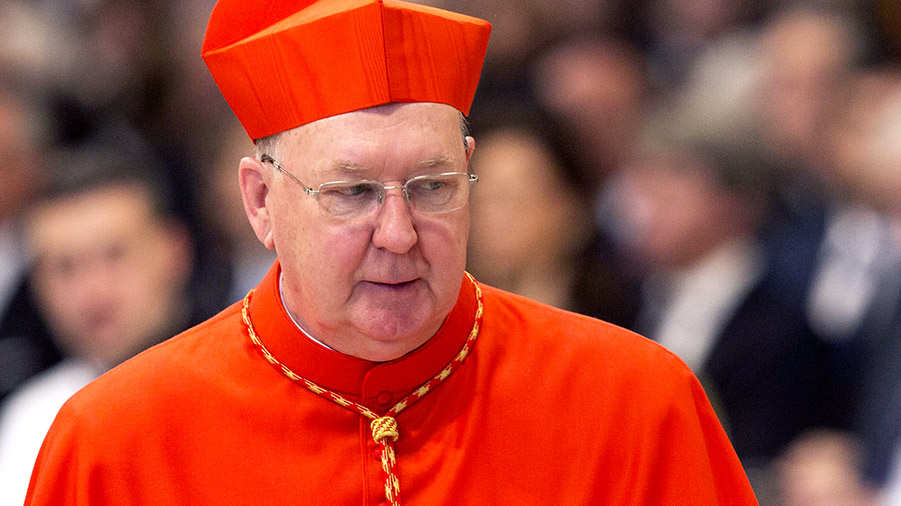
Do you receive the Ruth Institute newsletter? This is what you missed this week. Cardinal Farrell’s swipe at all priests really got my goat! Continue reading “Cardinals Hurting Clergy: Speak for Yourself Cardinal Farrell”
Author: jenniferrobackmorse
Cardinal O’Malley’s statement is not enough
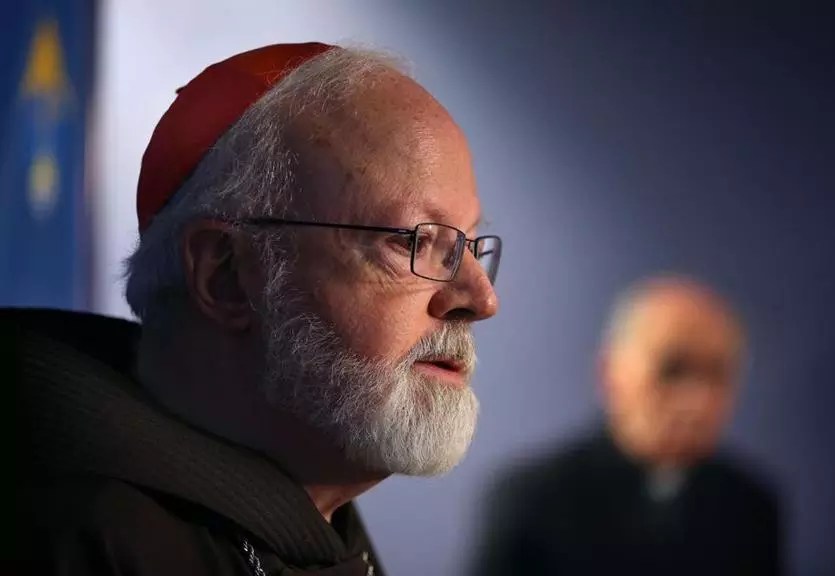
Main stream news sources, perhaps surprisingly, seem to be taking Cardinal O’Malley’s statement about the McCarrick Queer scandals at face value. 
Reuters: “Top Cardinal demands Vatican get tough with bishops on sex abuse.”
The Boston Globe: “Amid new sex abuse scandal, “O’Malley issues warning to church.”
Only at the bottom of the Globe article, do we find this nugget: Continue reading “Cardinal O’Malley’s statement is not enough”
Question for my SSA (Same Sex Attracted) friends

What do we call guys like Cardinal McCarrick? (Please, no smart aleck answers.) Terminology is extremely important in the on-going discussion about how the Body of Christ should address same sex attraction. We need to steer clear of 2 different pitfalls.
- “Pedophilia abuse” vs. “homosexual abuse.”
- “Gay” vs. “same sex attracted” or some other term.
Regarding #1: Continue reading “Question for my SSA (Same Sex Attracted) friends”
Speak for Yourself, Cardinal Farrell
My latest at The Stream (July 20, 2018)

I was always taught to respect the clergy. Give them the benefit of the doubt. Should criticism be necessary, let it be as gentle as possible. But what do we do when the clergy harm each other? Cardinal Kevin Farrell’s recent comments about priests lacking credibility for preparing couples for marriage amounts to an attack on every priest in Christendom. He makes an unnecessary criticism, in a harsh manner. Worst, his comments bring disrespect to the priestly office itself. A bit of thought, plus a brief look into the Cardinal’s background, may help explain his comments, wrongheaded though they are.
Cardinal Farrell’s Claims
Let’s review the Cardinal’s comments:
During an interview … Cardinal Kevin Farrell, prefect of the Vatican’s Dicastery for Laity, Family and Life, said that ‘priests are not the best people to train others for marriage.’
They have no credibility; they have never lived the experience; they may know moral theology, dogmatic theology in theory, but to go from there to putting it into practice every day … they don’t have the experience.
Gay Marriage is “here to stay,” says lawyer
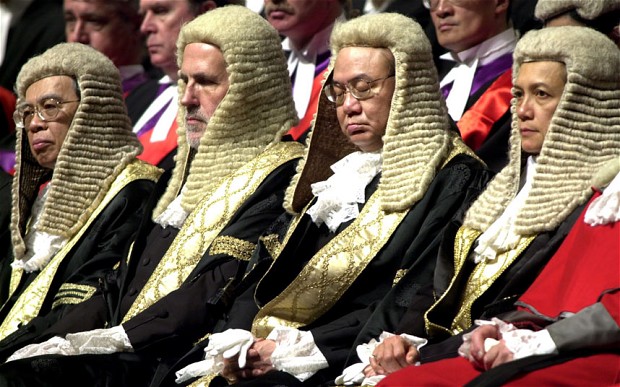
“Gay Marriage is Here to Stay, even with a conservative court,” says Cato Institute’s Senior Fellow Walter Olson. What he really means is: “Gay marriage has not inconvenienced the legal profession. We won’t be changing gay marriage.”
No-fault divorce did not overly inconvenience the legal profession either. Some lawyers make a lot of money from divorce. That does not mean unilateral divorce is good public policy. The children of divorce did not all “get over it,” as the experts predicted.
Obergefell redefined parenthood in the process of redefining marriage. Parenthood is no longer a natural reality the government merely records. Parenthood is becoming instead, a purely legal Continue reading “Gay Marriage is “here to stay,” says lawyer”
Secular Arguments for Marriage are Not Enough

My latest at Crisis:

Scott Hahn is a prolific Biblical scholar with a huge fan-base among orthodox Catholics. He doesn’t need my help promoting his new book, The First Society: The Sacrament of Matrimony and the Restoration of Social Order. But I need some help from him. I need his help convincing my pro-marriage policy-wonk friends that our defense of marriage needs spiritual and theological arguments, along with natural law arguments. What we are doing isn’t working.
Losing the Public Policy Argument
No serious person can deny it: marriage, the institution of one-man-one-woman-for-life, is getting clobbered in public policy debates. I’ve been involved in pro-family debates for a long time and I’ve used plenty of social science data and logical reasoning. I’m convinced the secular world needs more than secular arguments.
We have lost the male-female requirement for marriage. We have Continue reading “Secular Arguments for Marriage are Not Enough”
Denigrating the Priesthood
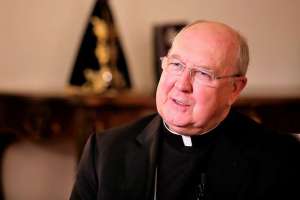
It is bad enough that Queers in the Church use their positions as cover for their sexual exploits. (See Cardinal McCarrick.) It is bad enough that the “progressives” make bad arguments for Church teaching “evolving.” (See John Gehring’s long-winded NYT whine. Absent from Gehring’s NYT’s bio, is his association with the Soros-funded Faith in Public Life.)
As if all that is not bad enough, Francis-appointed Cardinal Kevin Farrell takes a swipe at priests doing marriage prep. Their celibacy disqualifies them, says Farrell, channeling The Ghost of Jack Chick, and other anti-Catholic screed-writers for centuries.
Sheesh. With friends like this, who needs enemies?
#MeToo: law enforcement does what it ought to do
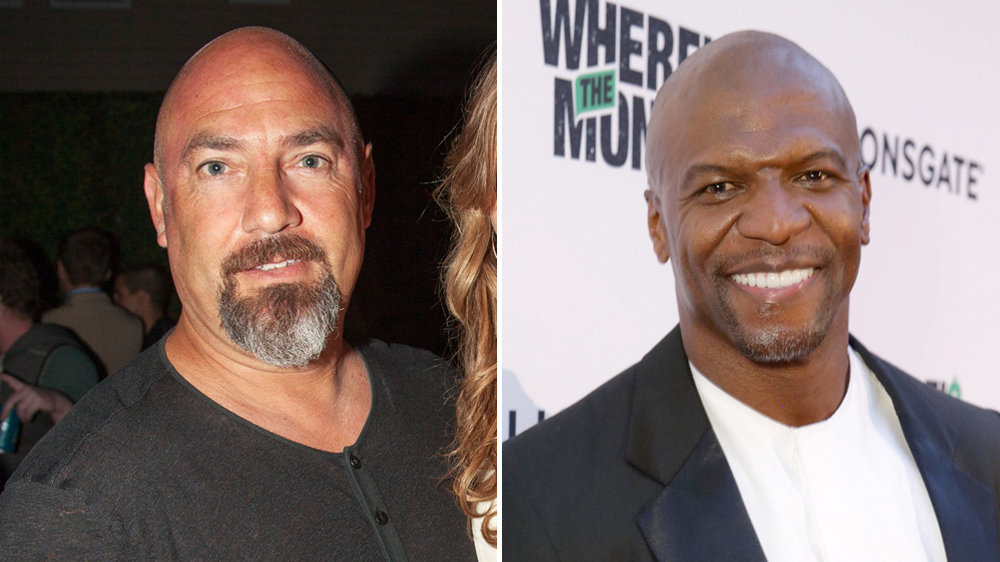
One interpretation of the #MeToo movement is that law enforcement should be tougher on sexual harassment and assault. I do not entirely agree. I think law enforcement should do its job. That means follow the law, including the rules of evidence and procedure. That means not expanding legal definitions beyond their limits. Punishment without limits is not justice either.
Terry Crews’ case an important instance of this principle. A powerful Hollywood man grabbed Crews’ crotch, and expected him to be ok with it. (Crews was at a party with his wife, no less, when the guy did this to him.) Crews did everything right. He left immediately. He pressed charges. He told his story to a congressional committee.
Law enforcement also did what it ought to have done. The incident was not a felony assault. The statute of limitations is shorter for a misdemeanor than for a felony.
“Given that the suspect did not make contact with the victim’s skin when he grabbed the victim’s genitals and there is no restraint involved, a felony filing is declined,” a prosecutor wrote on a charge evaluation worksheet.
The case was referred it to the office of L.A. City Attorney Mike Feuer for possible misdemeanor prosecution. According to a spokesman in Feuer’s office, the case exceeded the one-year statute of limitations for misdemeanors, and so the office declined to prosecute on Feb. 20.
That is why law enforcement is not prosecuting Hollywood Slimebag Adam Venit. But the rest of us are entitled to say mean things about him if we want.
Adam Venit is using his position of power to take what he wants sexually. He thinks he is above the law of common decency. Men who assault men should be held accountable. “Gay” men don’t get a free pass. Or a free grope. 
Men who assault men = just-as-toxic- masculinity
The #MeToo movement has fueled some kinds of feminism, especially the type that claims that “toxic masculinity” is to blame. Only problem: the phrase “toxic masculinity” all too often means “masculinity” without adjectives.
The reports of men sexually assaulting and harassing other men should count as toxic and abusive also. But somehow “gay” men get a pass.
Look at the recent case of actor/former NFL star Terry Crews. He was groped by powerful Hollywood agent, Adam Venit. As Crews recounts it, Venit, “groped his (Crews’) genitals in front of his wife and “grinned like a jerk” at the pair’s shocked response.”
In a story about the Crews incident, the Independent includes a series of charts about sexual assault in the US. Of the 8 charts, not a single one reports male victims of sexual assault. Not one. Three are specifically female victims, the other 5 don’t specify. AND THIS TO ACCOMPANY A STORY ABOUT A MALE VICTIM!
 Another of my pet peeves: Figure 1 of these charts lists “type of perpetrator.” The category, “intimate partner” drives me crazy. Anyone who has looked carefully at the data knows: husbands are less likely to assault their wives, than are cohabiting males or dating boyfriends. By grouping all “intimate partners” together, these data obscure the hazards of non-marital sexual relationships, and exaggerate the risks of marriage.
Agenda, anyone?
Will Cupich “Accompany” Reluctantly Divorced Spouses?

 Cardinal Cupich has been holding seminars on implementing Amoris Laetitia. These “New Momentum Conferences” will “provide formative pastoral programs.” I wonder whether these seminars will include anything for reluctantly divorced persons. No one else seems to be doing anything for abandoned spouses. Perhaps Cardinal Cupich and his friends will step up to the plate.
The public, including many Catholics, has the impression that no-fault divorce allows two sensible and mature adult people to agree to end their marriage. We imagine that the state must not interfere in this mutual decision. No one should cry over the spilt milk of a “dead marriage.” Many in the Church tacitly agree.
But setting theology aside, let’s challenge the basic premise of no-fault divorce. What if one person wants a divorce and the other wants to remain married? Dr. Stephen Baskerville, frequent contributor to these pages, made me aware of this possibility in his first book, Taken into Custody. If the spouses do not agree, justice requires adjudication by a neutral party. But on what basis would that neutral party decide which spouse to side with: the spouse who wants the divorce, or the spouse who wants the marriage?
The Grand Divorce Narrative offers no answer. The official ideology of no-fault does not acknowledge that such a case can even exist. And if we add the (highly dubious) claim that “kids are resilient,” then there is no reason for anyone to favor preserving a marriage, even one with children. As for adjudication between the spouse who wants the marriage and the one who wants divorce, forget it. No-fault divorce means the state always sides with the party who wants the marriage the least.
The Grand Divorce Narrative, subtly or not-so-subtly, suggests people who complain about divorce probably did something to bring it on themselves. They need to stop whining and get with the program. 
I wish I could tell you whether the abandoned spouses are a misbehaving lot. I wish I could tell you anything systematic about the reluctantly divorced. Unfortunately, all I have is anecdotal information. The people who normally collect and analyze this kind of thing seem to be completely uninterested.
We don’t even know how many reluctantly divorced or abandoned spouses there are.
 Here is one snippet. I once bemoaned the fact that we have no data on the number of reluctantly divorced persons. My friend, University of Texas sociology professor, Mark Regnerus chimed in that he had some data on this question in his new book, Cheap Sex.
I checked it out. In Figure 5.2 on page 161, he asked this question of divorced spouses, “who wanted the marriage to end, you, your spouse, or both of you?” Only 24 percent of women and 27 percent of men said, “we both wanted it to end.” In other words, in his survey, over 70 percent of divorces have a reluctant partner.
The CDC reported over 800,000 divorces from 44 states and the District of Columbia in 2016. If 70 percent of those divorces had a reluctant partner, that is over a half million reluctantly divorced people, in a single year. Add that up, year after year for forty years. That is a lot of broken hearts and wounded souls, walking around, socially invisible, and isolated.
Please note: counting reluctantly divorced persons was not the focus of Dr. Regnerus’ study. God bless him, he stumbled across it while studying something else. I don’t know of any other large scale, representative study of this question. This lack of professional and scholarly interest testifies to the power of the Divorce Ideology.
We also know very little of the lived experiences of the reluctantly divorced or abandoned spouses. We do know that divorce doubles a man’s probability of suicide and has essentially no impact on the woman’s chance of suicide. But we don’t really know why. As to spiritual life, we know that children of divorce are less likely to practice any religion. But as far as I know, no one has ever asked how divorce affects the religious commitments of the adults, particularly, one who was divorced against their will. The category, “reluctantly divorced persons” does not even exist in the minds of the scholars who have the expertise to study this sort of thing. After over 40 years of no-fault divorce, I am appalled that we have so little information about the reluctantly divorced or abandoned spouses.
And I might add, I’m also appalled at the lack of pastoral concern for the reluctantly divorced, blameless, or abandoned spouses. In all the uproar over Amoris Laetitia, in all the endless yammering in favor of “accompaniment” and “discernment,” for the divorced and civilly remarried, one can find almost nothing about the spouse of the original union.
I know an abandoned spouse who changed parishes. She couldn’t bear to see her spouse receiving communion with his new cohabiting girlfriend. He evidently “discerned” that this was hunky-dory. The pastor wasn’t much help to my friend. He told her the “people fall out of love,” and that “everyone gets an annulment.” He assumed that my friend was also dating someone else, which she had no intention of doing.
What was this pastor thinking? Why didn’t anyone ensure she feels “fully integrated” into the life of the parish where she and her husband were married?” Will anyone “accompany” abandoned spouses like her? Why is the Church abandoning them to the brutal injustice of the divorce culture?
At least on paper, the Church still holds to the radical teaching of Jesus on the indissolubility of marriage. I hope Cardinal Cupich and his friends pay attention to the reluctantly divorced, though I’m not holding my breath. Catholics, of all people, should be paying special attention to abandoned spouses. Their pain proves that Jesus was right all along.
Originally published at Crisis on March 14, 2018.
 Dr. J's Blog